I've been having a hot-flashy bunch of mornings, waking up at 3 or 4 or 5 because I'm TOO HOT.
I'm discovering for myself an interesting correlation between the hormones that make me flushed and feelings of shame.
Shame is a hot emotion for me. It starts with a funny feeling in the pit of my stomach: an uncomfortable, unsettled, roiling feeling that spreads up my chest, arms and face in a blush of heat and colour. Shame-faced, as they say.
For me, hot flashes feel a lot like shame. The only difference is that hot flashes don't start with that feeling in the pit of my stomach.
What's particularly interesting to me is that days when I'm having a lot of hot flashes also seem to be days when I am more likely to do or say something that causes me to feel shame. I've been wondering about how the mechanics of that work. Do the hormones make me more likely to say or do things I could feel ashamed of, or do they make me more likely to feel shame about something that I have said or done?
After much consideration, I think that what's going on here is that my discomfort is acting as a catalyst for my behaviour and the ensuing shame. Hot flashes are uncomfortable. So are many other peri-menopausal symptoms, like depression, down-spiralling self-regard, lack of sleep/fatigue or feeling like you're about to burst into tears for no reason. I also believe that a heightened sense of "not belonging" might be a peri-menopausal symptom, in the same way that it is often an adolescent one.
I think it is a pretty basic instinct to discharge discomfort by pushing it away: sending a harsh email or flippant text, making a mean joke, gossiping – essentially making one's own discomfort be about someone else.
Last week, for instance, I told a joke that seemed funny in my head, but landed with a THUD. And then the other day, I found something slipping out of my mouth that – well, if someone had said something like that to me, I would have felt so angry and judgmental. I realize now that both instances were knee-jerk reactions to feeling like I didn't belong. Both times I felt very ashamed afterward – afraid that I had been insensitive or inappropriate and either hurt somebody's feelings or ticked them off or just simply acted like a real jerk – like someone I don't want to be.
Both times I went and ate a large amount of chocolate afterwards.
And then I felt better. Well, I felt less ashamed. I did feel physically queasy, so it's probably more accurate to say that I felt both better and worse at the same time.
Making the connection between sugar and shame felt enlightening. I suppose since shame is the fear of not belonging/being loved and eating sugar simulates feeling loved and comforted for me, it makes sense that eating sugar would soothe my feelings of shame.
Sugar is a bandaid.
Sometimes, bandaids come in handy. They are great at temporarily protecting an open wound. But what I've been thinking more and more is that the hope of healing those wounds lies in leaning in to my discomfort and doing a better job of owning it.
This is a rocky time for me, and also a beautiful time – a beautiful, rocky time. I feel lucky to be where I am, to have the option of a lot of solitude and quiet and space to be where I'm at. And when I'm in a situation where I feel uncomfortable or like I don't belong, I am encouraging myself to lean into my discomfort, to breathe and to own that I feel how I feel and that that is okay, that I am still safe. And when I don't feel up to doing that, I am giving myself permission to step away – or to burst into tears – or more likely, to step away and then burst into tears.
This is going to be a struggle for me. It will require me to be much more vulnerable that I'm comfortable being. I hope I can accept myself where I'm at and feel compassionate for myself moment to moment. In all of these beautiful, rocky moments.
Showing posts with label healing. Show all posts
Showing posts with label healing. Show all posts
Friday, June 17, 2016

Wednesday, August 19, 2015
9 interesting things I've learned about forgiveness
I'm a bit of a grudge-holder.
This is not my favourite part of my personality. But I can see why and how it developed and I can try to have compassion for myself when I'm feeling bitter and resentful.
I used to hold on to and fuss over:
Every.
Little.
Thing.
I've gotten a lot better about that. I don't sweat the small stuff much anymore. Little things tend to roll off my back pretty quickly and easily.
And I'm getting better at expressing myself when I'm upset. I have been really pleased (and kind of surprised, actually) to have been met with a lot of kindness and understanding recently when I've had exchanges that have upset me that I needed to talk through with other people. Very often, hurts are unintentional and if both parties are willing, it can be an easy matter to sort things through and get back on a comfortable footing. In fact, working through a misunderstanding often brings us closer together with our friends, family members or lovers. Being able to work things out and salve hurt feelings builds trust.
However, when someone hurts me severely, and is not interested in trying to make amends or sorting things out, I usually feel like I'm falling apart. When that happens, anger and judgment are what I use as binding agents to hold myself together. It's a proven strategy for me. I've made it into my 40s without disintegrating into a chaotic mess — and frankly, I am grateful for the coping mechanisms that have enabled me to do that.
The unfortunate thing about that is that it can take me a long time to forgive major injuries.
So far, I have mostly succeeded (eventually) in forgiving people who've hurt me badly.
I feel like I have learned some interesting things about forgiveness over the years.
But I have learned to trust that it usually comes.
Eventually.
In its own time.
And for that, I am very, very grateful.
Because forgiveness, when it finally arrives, unshackles my heart and sets me free to heal.
This is not my favourite part of my personality. But I can see why and how it developed and I can try to have compassion for myself when I'm feeling bitter and resentful.
I used to hold on to and fuss over:
Every.
Little.
Thing.
I've gotten a lot better about that. I don't sweat the small stuff much anymore. Little things tend to roll off my back pretty quickly and easily.
And I'm getting better at expressing myself when I'm upset. I have been really pleased (and kind of surprised, actually) to have been met with a lot of kindness and understanding recently when I've had exchanges that have upset me that I needed to talk through with other people. Very often, hurts are unintentional and if both parties are willing, it can be an easy matter to sort things through and get back on a comfortable footing. In fact, working through a misunderstanding often brings us closer together with our friends, family members or lovers. Being able to work things out and salve hurt feelings builds trust.
However, when someone hurts me severely, and is not interested in trying to make amends or sorting things out, I usually feel like I'm falling apart. When that happens, anger and judgment are what I use as binding agents to hold myself together. It's a proven strategy for me. I've made it into my 40s without disintegrating into a chaotic mess — and frankly, I am grateful for the coping mechanisms that have enabled me to do that.
The unfortunate thing about that is that it can take me a long time to forgive major injuries.
So far, I have mostly succeeded (eventually) in forgiving people who've hurt me badly.
I feel like I have learned some interesting things about forgiveness over the years.
Here are my nine favourite things that I have learned about forgiveness
- Forgiveness can take me a very long time.
- I can work toward forgiveness, but I can't force it. It comes when it comes.
- When it arrives, major forgiveness arrives all in a rush – an epiphany that feels a lot like a religious experience. Even if I've worked and worked and worked toward it, when it arrives, it feels like an instant transformation.
(Incidentally, this is also my experience of deciding to let go of relationships. I'll be struggling, struggling, struggling trying to make something work that just isn't, and then I'll have what feels like a sudden realization that it is time to move on; that I simply need to remove myself from the situation.) - I believe I have experienced far greater benefits from letting go of my resentments than have the people I have forgiven.
- It is easier for me to forgive someone who is making, has made, or has even attempted to make, amends.
- Time and distance are essential components for me; it is really hard (perhaps impossible) for me to forgive someone who is in the process of hurting me in the present moment. I mean, I'm not Gandhi, or anything (although, from what I hear, Gandhi wasn't necessarily Gandhi either).
- Forgiveness does not heal the wounds that have been inflicted.
This is perhaps the most interesting thing about forgiveness in my mind. Even once I forgive the other, I still have to deal with the consequences of the wounds that were inflicted. Forgiveness for me is only the first step. On the plus side, forgiveness frees up a lot of energy to put toward working to heal those wounds. On the downside, the older I get, the more I understand (and believe) what my Nana always used to say about how the hurts we have experienced stay with us forever. She said to me many times: "There will always be a scar there." And I think she was right. At least for people with personalities like hers and mine. (She also advised against picking at those scars. I think she was right about that too). - Often, the people we feel have hurt us don't see the events that took place in the same way that we do.
I don't think very many people set out to be the villain in someone else's life. And even when people are extremely harmful to others, it is often not in their best interest to admit to others or to themselves the harm that they've done. I find that most people have good stories/reasons/excuses for why they did what they did. They might even think the whole thing was the fault of the person who feels hurt! (And maybe part of it was. Owning up to one's own share in a dynamic can be an important piece in the forgiveness puzzle.) - Forgiving someone doesn't mean that you ever want to be in contact with them again.
Some people are just not good for us. As a friend once wisely told me, "Hurt people hurt people." Often, if we keep certain people in our lives, they are just going to keep hurting us and keep needing to be forgiven. Now getting some practice with forgiveness can be a good thing, but there's a point where we are just beating our heads up against a brick wall. And, if we don't want ourselves to become the hurt people who hurt people, we need to protect ourselves from people who know how to hurt but who don't know how to heal or repair damaged relationships and broken hearts.
But I have learned to trust that it usually comes.
Eventually.
In its own time.
And for that, I am very, very grateful.
Because forgiveness, when it finally arrives, unshackles my heart and sets me free to heal.
Monday, December 22, 2014
Design Your Year: 2015
I find December difficult. I call it Holiday Seasonal Affective Disorder (or H-SAD): a dislike of the short days, the mandatory gaiety (or at the very least the struggle not to harsh others' buzz) and the rampant consumerism. Most years, I find myself wishing I could go to bed on December 1st and wake up on the 31st, just in time to bid the old year, and especially December, a hearty farewell.
This year, December has been particularly difficult. The past year has been a doozy – lots of heartbreak, some serious illness in my family, the realization that I've made some big mistakes over the past couple of years and am now facing the consequences of those decisions, an ensuing depression, and my struggles to answer a call from within to take better care of myself, including doing some challenging work to transform my relationship with food and eating.
Yes, 2014, you were a big, bad year. One for the books.
There can be something sweet about closing the door on a difficult year
Well, bittersweet, at least. Which is to say, that I've been mostly feeling bitter. I definitely have a tendency toward the year-end review, and I have been looking back over this past year with a bad attitude, my disappointments and pain looming much larger than my accomplishments and blessings. The sweet part though, is that time marches on and the present becomes the past. Wounds begin to heal and hope begins to return.
I am a fan of new
years in general – I like the feeling of a fresh start, the feeling of possibilities
and potential. The chance to re-think and change things, to make better decisions for myself, to evolve and grow.
I know it's just an artificial line in our invented sense of time. Every day is the beginning of another 365, but personally, I'm always happy to draw a line shortly after Christmas and start again.
A little help...!?
I felt like I needed a some extra mojo to shape a plan for some new and different experiences in 2015. When I read that Jamie Ridler was offering a planning workshop called "Design Your Year", I was very interested. Jamie is a creativity coach in Toronto and I've done work with her in the past, including a dream board workshop, a glorious creativity-sparking dance party and participating in the Kickin' It Old Skool Blogathon (which did wonders for my H-SAD last year).
I'm not a formal planner, usually preferring to fly by the seat of my pants, but I felt in my gut that I wanted to take Jamie's class. Unfortunately, though, it was offered at a time that didn't work for my schedule. I had another commitment; I thought I had to let Jamie's class go. But then, I discovered that Jamie was making a playback of the class available until January 31, 2015 and I could do it any time before then. As soon as I heard that, I signed up.
I did the class this past weekend...
 | |
| What Design Your Year looked like for me. |
It was excellent!
I feel like it brought me a ton of clarity about what I want and what I need for 2015. And it was fun: with sticky notes, journaling exercises, visual exercises and lots of guidance from Jamie about the many possibilities: different ideas about how to structure, grow and release the ways I think about planning.
I often have a "get 'er done" attitude toward the year – for example: "this year I'm going to record and release a CD", or "this year I'm going to play as many gigs as I possibly can and find out if I have a chance at becoming famous." Yes, I don't usually shy away from big goals and I would even say that in the past I have had a tendency toward grandiosity.
The coming year is going to be very different.
My hopes for 2015
I have a number of gentler, more personal and internal goals for 2015. I still want to make and share creative work, so I'm excited about my 2015 52-Song Project (more about that over on my music blog). And I plan to revive my old practice of running "Creative Marathons" near the solstices and equinoxes next year.
My main focus, though, is going to be on self-care and self-respect. I want (and need) to improve my ability to make decisions that are gentle, kind and decent to myself. I want to deepen my yoga practice, do more work around food, eating and body image and make peace with the past couple of years, through forgiveness, understanding and humility.
I want 2015 to be a gentle year, a simple year, a fun and delightful year. I want it to be a peaceful year, a relaxed year, an easy year, a straightforward year.
Most of all, I want this year to be for me. I have an overall tendency to give away a lot of my time and energy. Usually, I have lots to spare, so it's not a problem. Sadly though, I have shared too many buckets from my well and received too little rain over the past couple of years. I feel depleted. The coming year needs to be about conservation and renewal.
My word for the year
Until I started writing this blog post, I had forgotten about the word I set as my intention for 2014. It was "right-size" as declared in a blog post a little less than 12 months ago. I did make some steps toward right-sizing with my tiny home and de-cluttering efforts, but 2014 had its own ideas and the word it dictated for the year was heartbreak.
There are lots of contenders for 2015's word. Humility. Self-Care. Respect. Authenticity. Courage. Acceptance. But in the final analysis, I believe my word for 2015 is:

***
Do you have a word in mind for the year ahead? I'd love if you shared your word (or any other thoughts) in the comments below. Happy New Year, everyone! I hope 2015 will be full of growth for you!PS: If you're interested in taking Jamie's planning class, I highly recommend it! It's available until January 31, 2015. Here's the link again: "Design Your Year"
Saturday, November 1, 2014
Depression Part 2: What do I need to do for myself right now?
It's November 1st and Salinger and I are in our new winter accomodations.
This is about a fresh-start-y as it gets, I think. And I need a fresh start.
I've really let myself sink down into the depths over the past year and more. The depression I've been evading most of my life has caught up with me. I've been looking at everything through ugly lenses, seeing the worst in myself, in my life, in the culture/society and world in which I live. What a downer I've been on!
I feel like I needed to go down this rabbit hole. I needed to finally admit to my struggles with depression. Once I realized I was depressed, I decided to give myself two weeks to wallow with all my might. I cried whenever I felt like it. I slept during the day. I thought dark thoughts about things and people. I ate tons of sugar and junk food.
It felt good. But partly it felt good because I knew it was for just a little longer. I knew that a change and a fresh start were ahead of me. I knew I was moving and I knew I had a plan for what this move is going to mean for me.
Basically, I have decided to take better care of myself. The depression that I grew up with and denied and defied, was always telling me the same things: You're not important. Other people's feelings are more important that your feelings. Other people's needs are more important than your needs.
Indeed, other people's feelings/needs might well be more important than my feelings and needs TO THOSE OTHER PEOPLE – fair enough. My problem was that I came to believe that other people's feelings and needs should more important than mine TO ME. Essentially, this means that I haven't been able to focus on taking good care of myself. Even if I was depleted or hurting, I would try to find a way to keep giving other people what I thought (and/or what they were telling me) they needed.
The trouble is that the amount of sugar I was consuming was really unhealthy. I've watched myself gain a few pounds every year and it's getting to a critical point where I don't feel healthy in my body anymore. I don't like the place I'm in emotionally, either. All the sugar in the world can't get me out of the spot I find myself in now – in fact, I think all of the sugar highs and lows and all of the denial sugar lets me do has been making everything worse.
In order to spare myself and others from having to accept/witness some of my emotions, I have been hurting myself.
It stops here.
I have a new mantra: Sugar is a flavouring, not a food (and I'm counting alcohol as a form of sugar). I'm still going to have some sugar-containing foods – as condiments, as seasoning, as very occasional treats, but no more sugar as food. No more sugar as emotional refuge. No more resorting on a daily basis to chocolate bars and soda pop and cake and cookies and ice cream. I'm not doing this to myself anymore.
 |
| Salinger, our yoga mat and all of the boxes that still need to be unpacked... |
I've really let myself sink down into the depths over the past year and more. The depression I've been evading most of my life has caught up with me. I've been looking at everything through ugly lenses, seeing the worst in myself, in my life, in the culture/society and world in which I live. What a downer I've been on!
I feel like I needed to go down this rabbit hole. I needed to finally admit to my struggles with depression. Once I realized I was depressed, I decided to give myself two weeks to wallow with all my might. I cried whenever I felt like it. I slept during the day. I thought dark thoughts about things and people. I ate tons of sugar and junk food.
It felt good. But partly it felt good because I knew it was for just a little longer. I knew that a change and a fresh start were ahead of me. I knew I was moving and I knew I had a plan for what this move is going to mean for me.
Basically, I have decided to take better care of myself. The depression that I grew up with and denied and defied, was always telling me the same things: You're not important. Other people's feelings are more important that your feelings. Other people's needs are more important than your needs.
Indeed, other people's feelings/needs might well be more important than my feelings and needs TO THOSE OTHER PEOPLE – fair enough. My problem was that I came to believe that other people's feelings and needs should more important than mine TO ME. Essentially, this means that I haven't been able to focus on taking good care of myself. Even if I was depleted or hurting, I would try to find a way to keep giving other people what I thought (and/or what they were telling me) they needed.
Sugar has been my best helper — and my worst saboteur...
I've really leaned on sugar to help me live my life. Whenever I was sad, angry or upset, a little sugar would numb those emotions and enable me to act cheerful. I thought that was a good thing because I thought other people needed/wanted me to act cheerful. Maybe they did and maybe they didn't, but that's what I believed.The trouble is that the amount of sugar I was consuming was really unhealthy. I've watched myself gain a few pounds every year and it's getting to a critical point where I don't feel healthy in my body anymore. I don't like the place I'm in emotionally, either. All the sugar in the world can't get me out of the spot I find myself in now – in fact, I think all of the sugar highs and lows and all of the denial sugar lets me do has been making everything worse.
In order to spare myself and others from having to accept/witness some of my emotions, I have been hurting myself.
It stops here.
I have a new mantra: Sugar is a flavouring, not a food (and I'm counting alcohol as a form of sugar). I'm still going to have some sugar-containing foods – as condiments, as seasoning, as very occasional treats, but no more sugar as food. No more sugar as emotional refuge. No more resorting on a daily basis to chocolate bars and soda pop and cake and cookies and ice cream. I'm not doing this to myself anymore.
Self-care begins here
Yes, I have a plan to take better care of myself. It starts today and it goes like this:- Change the sugar thing;
- Check for food sensitivities: today I'm starting two weeks of no gluten, dairy, soy or corn and then will introduce them back one at a time to see if I'm sensitive to any of those foods. I've been suspicious of dairy for a while and I'm curious about the others. Here was breakfast:

Yes, that's brown rice, pickled ginger and avocado. It was delicious! - Implement some of the other strategies from the Tranform Your Relationship with Food course that I took in the spring, especially slowing down and relaxing my eating and preparing healthy snacks so I always have some on hand;
- Shop for local, sustainable food at the local farmers' markets;
- Use my awesome adjustable desk in the standing position more of the time;
- Use fitbolt.com to make sure that I take regular breaks for movement when I am working/playing at the computer;
- Practice yoga regularly – I'm shooting for half an hour a day (I'm doing the 15-day free trial at yogaglo.com) with one 60 or 90 minute session on the weekend. Salinger was a fan of and active participant in our first yoga practice this morning;
- Dance Nia once a week – one of the benefits in living near Mahone Bay is being close to Kathleen Naylor's awesome Nia class at the Mahone Bay centre;
- Do something fun and frivolous at least once a week – a concert, movie, play, coffee date or meal out;
- Simplify: my life, my eating, my schedule, my volunteer commitments, my stuff;
- Try to put some boundaries around work – this is going to be a toughy. As I head into my busy season and think about what I can do, I no I can't take a day off or limit my number of hours per week for the jobs that I commit to. But I can limit the number of jobs I accept and I plan to;
- Walk: I am in the heart of Rails-to-Trails country here in Martin's River. I've downloaded the map and I intend to explore;
- Allow myself to feel my feelings;
- Allow myself to express my feelings;
- Think positively whenever possible (yes, Stuart Smiley fans, I am indulging in daily affirmations :-);
- Allow myself to be imperfect at all of this, keep feeling my feelings and keep trying again (or tweaking) whenever something doesn't work for me.

Saturday, October 4, 2014
There is something in the autumn... Let's call it wisdom
A Vagabond Song
THERE is something in the autumn that is native to my blood—Touch of manner, hint of mood;
And my heart is like a rhyme,
With the yellow and the purple and the crimson keeping time.
The scarlet of the maples can shake me like a cry
Of bugles going by.
And my lonely spirit thrills
To see the frosty asters like a smoke upon the hills.
There is something in October sets the gypsy blood astir;
We must rise and follow her,
When from every hill of flame
She calls and calls each vagabond by name.
–Bliss Carman
This is one of the many poems that I associate with my grandmother. She would recite it often in the fall and to this day, when the asters are out in full force along the sides of the road in Nova Scotia, fragments of this poem run through my head anytime I go anywhere.
I am missing my grandmother quite a lot lately. A friend posted this link on Facebook this week, a video interview about how to design a good life for oneself. In it Debbie Millman talks about how most of her design contemporaries feel like frauds who are always striving to do work of which they can feel proud. She says the only designers she's spoken with who don't seem to feel that way are mentors of hers who are in their 80s. They seem to know who they are and to feel confident and competent in their work, their choices, their lives.
In the wake of the turmoil and upset of the past year, I suppose I'm feeling a longing for the equanimity of age. I had the great benefit of my grandmother's company into her late 90s, and she could always be counted on for perspective and wisdom (along with a pot of tea and a hand of cards). I know if Nana were here she would reassure me that next year will be better than this year. Or if not next year, the year after. Having lived through many challenges herself, I know what she would say of my recent struggles with heartbreak and with peri-menopausal symptoms: "The wounds we get leave scars that we can see for the rest of our lives, but after a while, they don't hurt anymore. Don't pick at it – it will heal faster."
She said that to me more than once while she was alive. I didn't always agree with her: at times in my life I've needed to pick the scabs off things and let them bleed clean. But this time, I think her words are right on the money – I need to stop picking over my hurts and stop dwelling on feeling bad. There is nothing I can do to change what has happened. And while I do feel bad right now, I think I'll feel better faster if I don't indulge those feelings. What is done is done and the best thing I can do is accept it and let it go.
I am very grateful that I listened to my Nana while she was alive.
I am grateful I stored her wisdom in my heart against the current need, since she isn't here to tell me herself:
It will be better in time.
Don't pick at it.
Thanks, Nana.
Wednesday, June 4, 2014
Body Wisdom Part 2: Food and Eating
A couple of months ago, I posted about overworking and the challenges I have listening to my body's wisdom.
In that post, I mentioned that I was planning to write a blog about my challenges with food and eating. This is that post.
I've spent a lot of my life feeling really screwed up about food and eating. I was a latch-key kid in a divorced family in the 70s and I learned early that a lot of things I wanted to be able to change were outside of my control. I couldn't get my family back together. Or escape my feelings about my family's collapse: they were so much bigger than my little 7-year-old self.
What I could do was take my allowance and buy something to eat that would make me feel temporarily better: a chocolate bar, ice cream cone, popsicle, or, the most cost-effective sugar high available at the Korean corner store near my house: rice candy.

Eating became my main way of coping with pretty much everything: disconnection, shame, intimacy, humiliation, loss, fatigue – with anything really, that reminded me of how it felt to live in a world where I don't have much control, but for some reason am supposed to be able to pretend to be in control – at least of myself and my emotions. A world in which I am not supposed to be a crybaby or a sook, even if that's how I sometimes feel like reacting to life.
When I fell madly in love for the first time at 21, and then couldn't stop that relationship from repeatedly spiralling down into conflict and misery, I realized that I had some serious work to do. As a result, I spent a lot of time in my twenties and thirties involved in an in-depth psychotherapeutic process. Therapy helped me immensely. I worked out many things – I became calmer and kinder and more relaxed.
But interestingly, my issues around food and eating didn't budge. I remained addicted to sugar, especially soda pop, and I remained an out-of-control eater. I felt hungry almost all of the time. When I was particularly stressed, I would go unconscious and eat until the feelings stopped. Over and over again. I couldn't make peace with food and eating.
In that post, I mentioned that I was planning to write a blog about my challenges with food and eating. This is that post.
My early experiences with food and eating
I've spent a lot of my life feeling really screwed up about food and eating. I was a latch-key kid in a divorced family in the 70s and I learned early that a lot of things I wanted to be able to change were outside of my control. I couldn't get my family back together. Or escape my feelings about my family's collapse: they were so much bigger than my little 7-year-old self.
What I could do was take my allowance and buy something to eat that would make me feel temporarily better: a chocolate bar, ice cream cone, popsicle, or, the most cost-effective sugar high available at the Korean corner store near my house: rice candy.
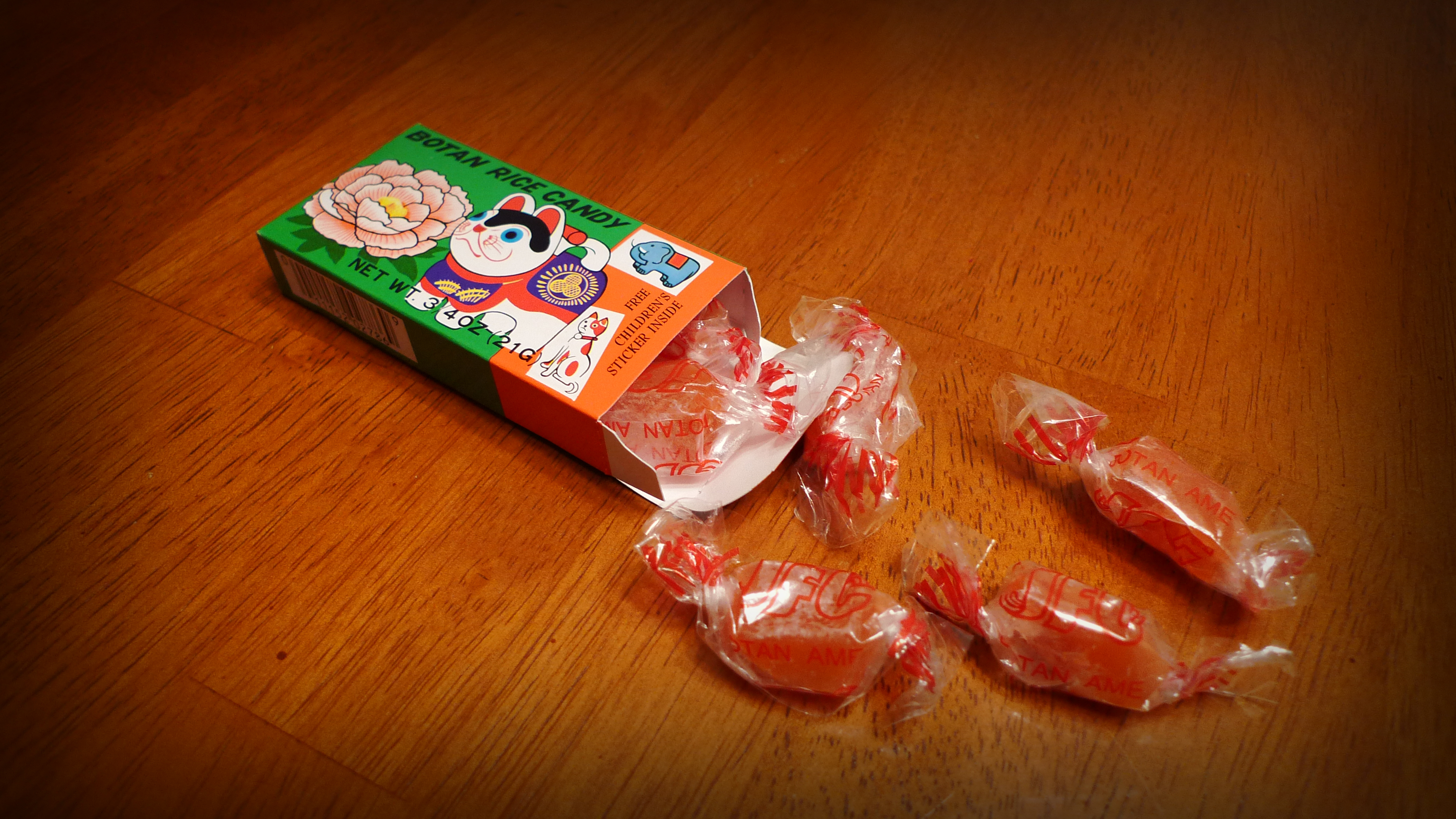
Eating became my main way of coping with pretty much everything: disconnection, shame, intimacy, humiliation, loss, fatigue – with anything really, that reminded me of how it felt to live in a world where I don't have much control, but for some reason am supposed to be able to pretend to be in control – at least of myself and my emotions. A world in which I am not supposed to be a crybaby or a sook, even if that's how I sometimes feel like reacting to life.
Getting in to psychotherapy
Because I was an unhappy kid who repressed her feelings, I grew into a very unhappy (and pretty mean-spirited) young adult.When I fell madly in love for the first time at 21, and then couldn't stop that relationship from repeatedly spiralling down into conflict and misery, I realized that I had some serious work to do. As a result, I spent a lot of time in my twenties and thirties involved in an in-depth psychotherapeutic process. Therapy helped me immensely. I worked out many things – I became calmer and kinder and more relaxed.
But interestingly, my issues around food and eating didn't budge. I remained addicted to sugar, especially soda pop, and I remained an out-of-control eater. I felt hungry almost all of the time. When I was particularly stressed, I would go unconscious and eat until the feelings stopped. Over and over again. I couldn't make peace with food and eating.
And every year, I gained another five or ten pounds.
I read myriad self-help books: Fat is a Feminist Issue by Susie Orbach, lots of things by Geneen Roth, Potatoes, not Prozac, by Kathleen DesMaisons. I related to many things in many of those books. They helped me feel less alone. If there were diet recommendations, I tried to follow them. For a little while.
Once, I had a lover talk me in to going to the most common North American weight loss program™. I enrolled and then he sabotaged my attempts to follow the program. That program helped me lose weight for sure. It also helped me realize that that lover was gaslighting me. But it didn't help me make peace with my eating. I could control my eating, for a little while, but I felt FAR from peaceful.
After leaving that relationship (and that weight loss program), I did an excellent in-person conscious eating course – all the rules of how to be a more conscious eater were presented, practiced and processed. It was a great class. I related. I released feelings. And it didn't change a damn thing for me.
I thought about going to OverEaters Anonymous. But I just wasn't ready to 12-step anything. (I've crossed that line now, on another issue, and am currently pretty in love with the many awesome things about 12-step programs – but that's for another post).
I was frustrated and let the whole thing go. "To hell with it," I thought. "Let me just eat whatever I want and be as big as a house. I don't care."
But my knees cared. And my right hip. And my feet. And also my pride and vanity. Ours can be a hard world in which to be a fat woman.
I'll try (almost) anything!
So, I tried a bunch of other things.I read myriad self-help books: Fat is a Feminist Issue by Susie Orbach, lots of things by Geneen Roth, Potatoes, not Prozac, by Kathleen DesMaisons. I related to many things in many of those books. They helped me feel less alone. If there were diet recommendations, I tried to follow them. For a little while.
Once, I had a lover talk me in to going to the most common North American weight loss program™. I enrolled and then he sabotaged my attempts to follow the program. That program helped me lose weight for sure. It also helped me realize that that lover was gaslighting me. But it didn't help me make peace with my eating. I could control my eating, for a little while, but I felt FAR from peaceful.
After leaving that relationship (and that weight loss program), I did an excellent in-person conscious eating course – all the rules of how to be a more conscious eater were presented, practiced and processed. It was a great class. I related. I released feelings. And it didn't change a damn thing for me.
In my next attempt to grapple with the issue, I tried to do some eating and fitness coaching with a friend. It was hopeless and she fired me as a client (I count myself lucky that we are still friends).
I thought about going to OverEaters Anonymous. But I just wasn't ready to 12-step anything. (I've crossed that line now, on another issue, and am currently pretty in love with the many awesome things about 12-step programs – but that's for another post).
I was frustrated and let the whole thing go. "To hell with it," I thought. "Let me just eat whatever I want and be as big as a house. I don't care."
But my knees cared. And my right hip. And my feet. And also my pride and vanity. Ours can be a hard world in which to be a fat woman.
Finally, something works!
So, I kept looking around. And then I saw a course on the Internet called "Transform Your Relationship with Food™."
That sounded like what I needed to do.
I thought and deliberated and then decided. I ponied up the dough and got ready to take the course.
It was at the worst-possible time of year for me, when I knew I'd be super-busy with graphic design work, but I didn't want to wait until the next time it was offered. That could have been in the fall or the following year even and I felt ready to tackle the issue right away.
You never know what you're going to get with an e-course. Most of the courses I've taken on line have been excellent, but a couple have been duds.
This one was beyond excellent. It's delivered as a series of video and audio presentations over eight weeks with journaling exercises and practices for each week.
The audio presentations were the most powerful thing for me. They are long, most over an hour and a half and I found it very therapeutic to listen to Marc David, the founder of the Institute for the Psychology of Eating (IPE), talk kindly (and expertly) to me about food, nutrition and eating.
I think the biggest breakthrough for me was the moment when I heard him say that OF COURSE we sometimes manage our emotions with food. OF COURSE we do, because it works. And sometimes that's what we need and it's okay. But we have choices and we're allowed to have deliberateness and joy in our decisions. We don't have to feel out-of-control and loaded down by shame.
What a contrast this is from the usual: You should eat this. You should eat that. It's all about portion control. You know how to lose weight, don't you? EAT LESS. Use a smaller plate to make your portions look bigger. Aren't you sick of buying new clothes every year? (These are all actual unhelpful things various GPs have said to me over the years).
The program has had its challenges for me. I got a little lost in week four, when some nutritional suggestions started to feel like the kind of food prescriptions I was used to rebelling against and ignoring. But by week 6, I was back on board, having made peace with the fact that I have no longing to be a "clean" eater. There are no plans in my future to go macrobiotic, all-raw, vegan, gluten-free or even vegetarian. No, I don't aspire to any dietary regime. My only aspiration is to become a peaceful eater.
And I'm well on my way.
The Transform Your Relationship with Food program encourages participants to become curious experimenters to figure out what foods and eating practices work for them, and how to explore feelings and ideas to create a new story around food and eating.
I still have many steps to take on this journey. There are a lot of practices I have yet to try, a lot of feelings and beliefs that I have yet to explore. Fortunately, the whole program is sitting on my hard drive, available for me to use on an ongoing basis.
Already, this seemingly immovable patch of disturbance in my life has shifted. I'm not hungry all the time anymore. When I eat consciously, I'm nowhere near as overwhelmed by fear and shame and rage as I used to be. And I've dropped three notches on my belt without doing anything in particular - well, nothing outside of beginning to transform my relationship with food and eating.
I feel deeply grateful for this newfound peace and hope. When an issue remains stuck for over 30 years, it's tempting to think that it's impossible to change. But I believe there is always a way to do the work. Sometimes it's a matter of finding the right kind of help.
Subscribe to:
Posts (Atom)